


Blogs
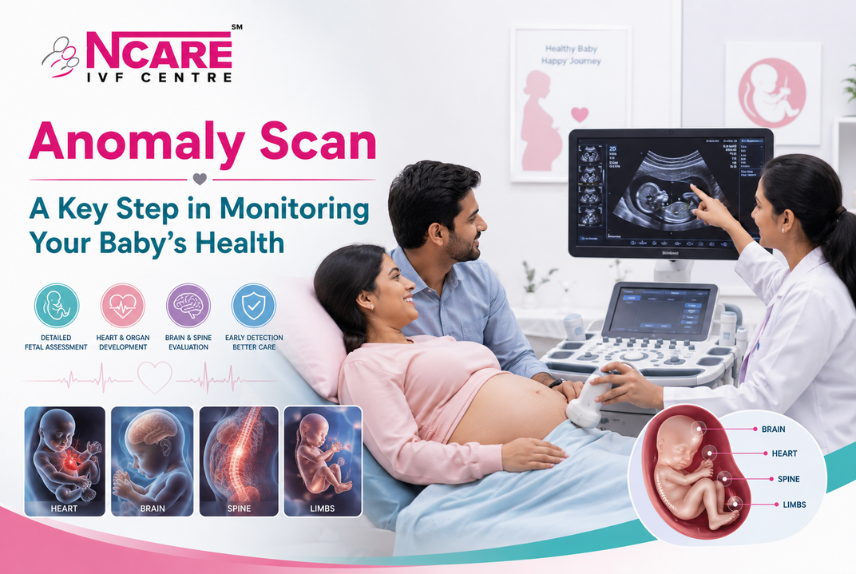
Anomaly Scan: A Key Step in Monitoring Your Baby’s Health
Pregnancy is a transformative journey filled with anticipation, excitement, and a natural desire to ensure that your little one is developing safely. Among the numerous prenatal milestones, the mid-pregnancy ultrasound, commonly known as the Anomaly Scan, stands out as one of the most critical health checks.
Whether you conceived naturally or through fertility interventions such as IUI Treatment or advanced reproductive technologies at a specialized IVF Hospital in Kerala, this detailed evaluation offers profound insights into your baby's structural development and overall well-being.
What is an Anomaly Scan?
Often referred to as the 18-to-22-week scan or mid-trimester scan, the anomaly scan is a comprehensive ultrasound examination that evaluates your baby's physical development from head to toe. Unlike early pregnancy scans that primarily confirm viability, dating, and heartbeat, this detailed assessment maps out the baby's internal organs, skeletal structure, brain development, placenta position, and amniotic fluid levels.
Why is it Necessary?
- Detailed Anatomical Review: It meticulously checks the major organ systems, including the brain, heart, spine, kidneys, and limbs.
- Placental and Fluid Check: It evaluates the location of the placenta to rule out conditions like placenta previa and measures amniotic fluid volume to ensure a healthy cushion for the baby.
- Growth and Biometry: It measures the baby's head circumference, abdominal circumference, and femur length to confirm that fetal growth aligns with the gestational age.
The Connection Between Advanced Fertility Care and Prenatal Scans
For many families navigating fertility challenges, the journey to parenthood involves specialized medical pathways. Couples who successfully conceive via an IVF Treatment in Kannur or after undergoing targeted IUI Treatment often experience heightened emotional investment during pregnancy.
Because assisted reproductive technologies (ART) require careful clinical oversight, leading specialists at the Best IVF Hospital in Kerala emphasize rigorous prenatal monitoring. The anomaly scan serves as a vital bridge between fertility care and obstetric management, reassuring parents that their hard-won pregnancy is progressing with optimal health outcomes. In rare instances where structural anomalies or complex developmental variations are detected early, access to specialized maternal-fetal medicine and Fetal Therapy ensures timely interventions, maximizing safety and therapeutic efficacy before birth.
What to Expect During the Procedure
If you are preparing for your scan, knowing what happens in the examination room can significantly reduce anxiety.
- Preparation: You will typically be asked to have a comfortably full bladder for the initial part of the scan, as it helps push the uterus upward for a clearer view, though modern equipment often requires less fullness than in the past.
- Gel and Transducer: A hypoallergenic, water-based gel is applied to your abdomen. The sonographer will move a handheld device called a transducer across your belly to capture real-time images.
- Duration: The scan usually takes between 30 and 45 minutes. Because the sonographer needs precise angles to measure tiny structures like heart chambers and finger bones, periods of intense focus and silence are completely normal.
- Safety: The procedure uses high-frequency sound waves rather than ionizing radiation, making it entirely safe for both the mother and the developing fetus.
Key Structures Evaluated During the Mid-Trimester Scan
The radiologist or fetal medicine specialist methodically examines every anatomical system during the session:
- The Brain: Checking the ventricles, cerebellum, and midline structures to rule out major neurological concerns.
- The Face: Ensuring the upper lip, palate, and eye sockets are well-formed.
- The Heart: A specialized fetal echocardiography perspective within the scan checks the four chambers, major outflow tracts, and rhythm to ensure proper cardiovascular function.
- The Spine: Tracing the vertebrae longitudinally and transversely to verify that the spinal column is closed and aligned.
- The Abdomen: Locating the stomach, kidneys, bladder, and bowel to confirm proper organ placement and development.
- Limbs and Extremities: Counting fingers, toes, and checking arm and leg bone lengths.
Current Trends in Fetal Imaging and Prenatal Care
Fetal medicine is evolving at a rapid pace, driven by technological innovations designed to improve diagnostic accuracy and enhance the parental experience.
1. HD-Live and 4D/5D Imaging
While standard anomaly scans rely on 2D grayscale imaging for clinical precision, advanced 4D and HD-Live rendering technologies are increasingly integrated into modern practice. These tools allow parents to see realistic, skin-toned surface renderings of their baby's face and movements, fostering early emotional bonding.
2. AI-Assisted Sonography
Artificial intelligence is transforming diagnostic imaging. AI algorithms assist sonographers by automatically standardizing biometric measurements, reducing operator-dependent variance, and highlighting subtle anatomical variations that might require closer expert review.
3. Integrated Genetic Screening and Non-Invasive Prenatal Testing (NIPT)
Modern prenatal care increasingly pairs the morphological data of the anomaly scan with early first-trimester screening or cell-free DNA (NIPT) results. This holistic approach provides a comprehensive risk profile for chromosomal conditions, ensuring personalized care pathways.
Regional Healthcare Infrastructure and Statistics
Kerala has emerged as a premier medical tourism and healthcare destination in India, characterized by high literacy rates, robust public health parameters, and advanced private medical infrastructure.
- Maternal and Child Health Indicators: Kerala boasts some of the lowest Maternal Mortality Ratios (MMR) and Infant Mortality Rates (IMR) in India, largely due to high institutional delivery rates and widespread utilization of early prenatal diagnostics like anomaly scans.
- Growth of Specialized Fertility and Fetal Care Hubs: Cities across the state, including major urban centers like Kochi, Thiruvananthapuram, Calicut, and Kannur, host world-class medical facilities equipped with high-resolution ultrasound technology and dedicated fetal medicine units.
| Healthcare Metric / Feature | Kerala Regional Overview | National Average Reference |
|---|---|---|
| Institutional Delivery Rate | Near 100% | ~89% - 93% |
| Prenatal Ultrasound Compliance | Exceptionally High (>95% in urban/semi-urban zones) | Varies significantly by rural/urban divide |
| Availability of Advanced Fetal Therapy | Widely accessible in Tier-1 and Tier-2 medical hubs | Concentrated primarily in metro cities |
| Adoption of ART & Specialized Care | High density of certified IVF and fertility clinics | Growing rapidly across urban India |
People Also Ask
1: When is the best time to get an anomaly scan?
The anomaly scan is ideally performed between 18 and 22 weeks of pregnancy. During this window, the baby is large enough for detailed visualization of internal organs and bones, yet small enough to move freely within the amniotic fluid for optimal viewing angles.
2: Can an anomaly scan detect all birth defects?
While the anomaly scan is highly accurate, it cannot detect 100% of conditions. Some minor abnormalities, functional heart issues, or developmental changes may manifest later in pregnancy or after birth. Its primary goal is to screen for major structural and chromosomal markers.
3: What happens if the scan detects an anomaly?
If a variation or potential anomaly is identified, your obstetrician will typically refer you to a maternal-fetal medicine specialist or a specialized center offering Fetal Therapy. Further diagnostic tests, such as targeted ultrasounds or amniocentesis, may be recommended to understand the condition fully and guide management options.
4: Do I need a full bladder for the 20-week anomaly scan?
Guidelines vary slightly by clinic, but a moderately full bladder is often requested at the beginning of the appointment. It helps elevate the pelvic organs and provides a clearer baseline image before the sonographer asks you to empty your bladder if further detailed views are needed.
Conclusion
The anomaly scan is much more than a routine hospital appointment; it is a profound medical milestone that safeguards your baby's health and offers invaluable peace of mind. By combining cutting-edge ultrasound technology with expert clinical evaluation, you receive support from a specialized IVF Hospital in Kerala or an experienced a spontaneous pregnancy, you take an essential step toward a safe delivery and a healthy future for your child. Always consult your obstetrician or fetal medicine specialist to discuss your scan results and tailor your prenatal care plan to your unique journey.
Recent Blogs

How to Avoid Ectopic Pregnancy: Expert Tips for a Healthy Pregnancy

How to Track Ovulation: Simple Ways to Find Your Fertile Days
Amniocentesis Test: Expert Guide to Diagnosis and Pregnancy Care

Symptoms of Low AMH: Common Signs and Fertility Solutions
Antenatal Scans: Complete Guide to Types, Importance, Safety & Pregnancy Care

Aneuploidy Screening: Complete Guide to Testing, Procedure, Cost & Pregnancy Care

Egg Freezing Process: Complete Step-by-Step Guide for Women in 2026

PCOS Fertility Treatment: How to Overcome Infertility with PCOS
IVF Pregnancy Calculator Free – Instant Results & Easy to Use

Recurrent Pregnancy Loss: Causes, Tests & Best Treatment Options (2026 Guide)

IVF Do’s and Don’ts for Higher Success Rates | Best IVF Clinics Guide

Best IVF Hospital in Kerala: IVF, IUI & Advanced Fertility Care

What Is Ovulation Induction Treatment?

How to Choose the Right Fertility Center in Kerala for Your Parenthood Journey

Best IVF Treatment in Kerala: Affordable, Advanced & Trusted Care

Best IVF Centre in Kerala – How to Choose the Right Fertility Clinic

Top IVF Questions & Answers — A Trusted Guide

IVF Treatment in Kannur - Why NCARE IVF Is a Trusted Name in Fertility Care

How Reliable is Preimplantation Genetic Testing in 2025
Best Guide To The IUI Treatment Process For First-Time Patients

Book Appointment
To reach out to our NCareHospital Team, please fill in the below form.
Our team members will revert back to you shortly.
Copyright © NCare IVF