


Blogs

Aneuploidy Screening: Complete Guide to Testing, Procedure, Cost & Pregnancy Care
Pregnancy is one of the most important journeys in a couple’s life, and modern medical technology now helps parents understand the health of their baby much earlier than before. One of the most recommended prenatal tests today is Aneuploidy Screening. This screening helps detect possible chromosomal abnormalities in a developing baby during pregnancy.
Doctors often recommend an aneuploidy screening test to evaluate whether the fetus may have conditions linked to abnormal chromosome numbers. The test is safe, widely used, and helps expecting parents make informed medical decisions during pregnancy.
In this detailed guide, you will learn everything about aneuploidy screening, including the procedure, benefits, accuracy, pregnancy care, and frequently asked questions.
What Is Aneuploidy Screening?
Aneuploidy Screening is a prenatal test used to identify the possibility of chromosomal abnormalities in a fetus. Chromosomes carry genetic information, and a normal baby usually has 46 chromosomes. When there is an extra or missing chromosome, it is called aneuploidy.
The screening mainly checks for conditions such as:
- 1. Down syndrome (Trisomy 21)
- 2. Edwards syndrome (Trisomy 18)
- 3. Patau syndrome (Trisomy 13)
- 4. Sex chromosome abnormalities
This screening does not confirm a disorder but estimates the risk of the baby having a chromosomal condition.
What Is an Aneuploidy Screening Test?
An aneuploidy screening test is a non-invasive prenatal screening performed during pregnancy to assess the likelihood of chromosomal abnormalities. It may include:
- 1. Blood tests
- 2. Ultrasound scans
- 3. Cell-free fetal DNA testing (NIPT)
The test helps doctors evaluate fetal development and recommend further diagnostic tests if necessary.
Pregnant women above the age of 35, couples with a family history of genetic disorders, or women with previous pregnancy complications are often advised to undergo this screening.
Why Is Aneuploidy Screening Important During Pregnancy?
Early Detection of Chromosomal Disorders
The biggest advantage of aneuploidy screening in pregnancy is early detection. It helps identify high-risk pregnancies during the first or second trimester.
Better Pregnancy Management
Doctors can monitor the pregnancy more closely if any abnormality is suspected.
Informed Medical Decisions
Parents get enough time to understand the condition and discuss treatment or care options.
Reduced Anxiety
A low-risk result can provide reassurance and emotional comfort to expecting parents.
Aneuploidy Screening in Pregnancy
Pregnancy-related chromosomal screening has become a standard recommendation in modern prenatal care. Aneuploidy screening in pregnancy is usually performed during:
First Trimester Screening
Conducted between 11 and 14 weeks of pregnancy. It includes:
- 1. Nuchal translucency ultrasound
- 2. Maternal blood test
Second Trimester Screening
Performed between 15 and 22 weeks. This may include:
- 1. Quadruple marker screening
- 2. Additional ultrasound evaluation
Non-Invasive Prenatal Testing (NIPT)
NIPT is one of the most accurate forms of aneuploidy screening. It analyzes fetal DNA present in the mother’s blood and provides highly reliable results.
Many couples visiting the Best IVF Clinic in Kerala are also advised to undergo advanced prenatal genetic screening for safer pregnancy monitoring and improved fetal health assessment.
Aneuploidy Screening Test Procedure
The aneuploidy screening test procedure is simple, safe, and non-invasive in most cases.
- Step 1: Medical Consultation - The doctor reviews maternal age, family history, previous pregnancy history, and current pregnancy health.
- Step 2: Blood Sample Collection - A blood sample is taken from the pregnant woman to measure specific hormones and proteins.
- Step 3: Ultrasound Scan - A specialized ultrasound checks fetal development and measures nuchal translucency.
- Step 4: Laboratory Analysis - The sample is analyzed to estimate the probability of chromosomal abnormalities.
- Step 5: Result Interpretation - Results are categorized as Low risk, Intermediate risk, or High risk.
If the screening shows high risk, doctors may recommend diagnostic tests like Amniocentesis or Chorionic villus sampling (CVS).
How Is Aneuploidy Screening Done?
Many parents ask, how is aneuploidy screening done? The screening is usually done through a combination of:
- 1. Maternal blood testing
- 2. Ultrasound imaging
- 3. Advanced DNA analysis
The process does not harm the baby and typically takes only a few minutes. Most reports are available within a few days, depending on the laboratory.
Role of Pre Implantation Genetic Testing in Fertility Care
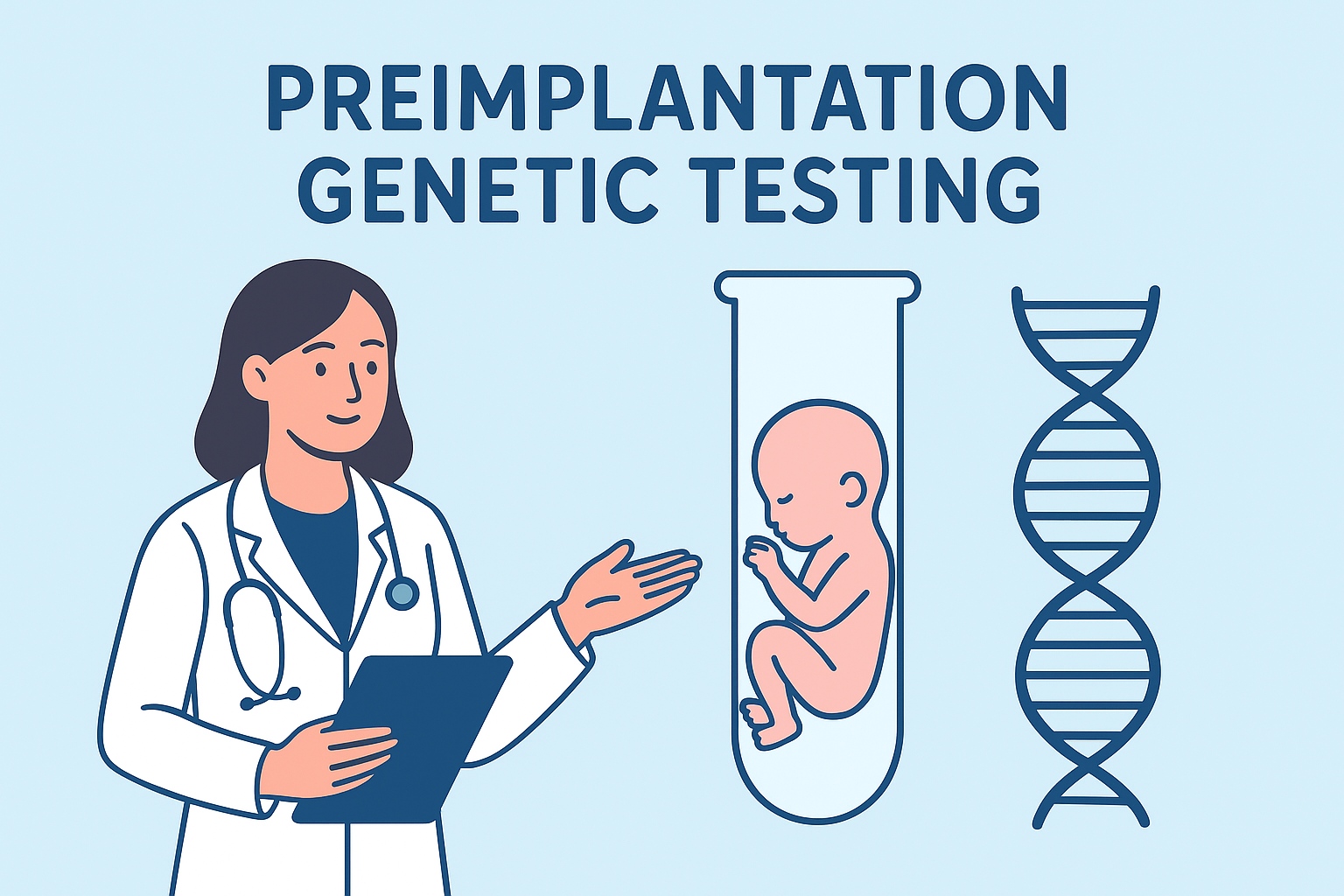
Modern fertility treatment has advanced significantly with technologies like pre implantation genetic testing. This procedure is commonly used during IVF treatment to examine embryos for chromosomal abnormalities before embryo transfer.
Couples undergoing IVF Treatment in Kerala may be advised to combine IVF with genetic testing to improve implantation success and reduce the chances of genetic disorders.
Pre implantation genetic testing is especially helpful for:
- 1. Recurrent IVF failure
- 2. Recurrent miscarriage
- 3. Advanced maternal age
- 4. Genetic disorder history
- 5. High-risk pregnancies
This advanced fertility technology improves embryo selection and supports healthier pregnancy outcomes.
Fertility Preservation and Genetic Screening
Today, many individuals and couples are choosing fertility preservation to protect their future reproductive options. Fertility preservation methods may include:
- 1. Egg freezing
- 2. Embryo freezing
- 3. Sperm freezing
Women delaying pregnancy for career, medical, or personal reasons often choose fertility preservation along with advanced reproductive screening options.
Several fertility specialists offering IVF Treatment in Kerala also provide fertility preservation programs combined with genetic counseling and prenatal screening support.
Types of Aneuploidy Screening Tests
- First Trimester Combined Screening: Combines blood tests and ultrasound findings.
- Quad Screen Test: Checks four substances in the mother’s blood during the second trimester.
- NIPT (Non-Invasive Prenatal Testing): Highly accurate screening using fetal DNA.
- Integrated Screening: Combines first and second trimester test results for better accuracy.
Who Should Consider Aneuploidy Screening?
Doctors may recommend aneuploidy screening test for:
- 1. Women above 35 years
- 2. Couples with a history of a genetic disorder
- 3. Previous pregnancy with chromosomal abnormality
- 4. Recurrent miscarriages
- 5. IVF pregnancies
- 6. High-risk pregnancies
However, many healthcare providers now recommend screening for all pregnant women regardless of age.
Accuracy of Aneuploidy Screening
The accuracy depends on the type of screening used. NIPT has very high detection rates for Down syndrome, Trisomy 18, and Trisomy 13.
However, screening tests are not diagnostic. A positive result only indicates increased risk and must be confirmed with additional testing.
Aneuploidy Screening Test Cost
The aneuploidy screening test cost varies based on:
- 1. Type of test
- 2. Hospital or fertility clinic
- 3. City and laboratory
- 4. Technology used
Estimated Cost in India
- Basic screening tests: ₹2,000 – ₹8,000
- NIPT tests: ₹10,000 – ₹35,000
Advanced genetic screening may cost more depending on the testing panel. Many patients searching for the Best IVF Clinic in Kerala also compare prenatal screening facilities, IVF success rates, and fertility support services before choosing a fertility center.
Benefits of Aneuploidy Screening
- Safe and Non-Invasive: Most screening methods only require a blood sample and an ultrasound.
- Early Pregnancy Monitoring: Helps detect potential risks during the early stages of pregnancy.
- Better Prenatal Planning: Allows doctors to prepare specialized pregnancy care if needed.
- Emotional Preparedness: Parents can understand possible medical conditions early.
Risks and Limitations of Aneuploidy Screening
Although very useful, there are some limitations:
- 1. Screening cannot confirm a disorder
- 2. False-positive results may occur
- 3. Additional diagnostic tests may be needed
- 4. Anxiety due to uncertain findings
Consulting experienced specialists and genetic counselors can help parents understand results accurately.
Difference Between Screening and Diagnostic Testing
| Feature | Screening Test | Diagnostic Test |
|---|---|---|
| Purpose | Estimates risk | Confirms condition |
| Invasiveness | Non-invasive | Invasive |
| Safety | Safer | Slight procedural risks |
| Timing | Early pregnancy use | Usually after abnormal screening |
Examples of diagnostic tests: Amniocentesis, CVS.
IVF Pregnancy and Aneuploidy Screening
Couples undergoing fertility treatments often hear about genetic testing and embryo screening. During IVF treatment, doctors may recommend pre implantation genetic testing (PGT) and prenatal aneuploidy screening after conception.
Many fertility centers providing IVF Treatment in Kerala use advanced reproductive technologies to improve embryo quality assessment and pregnancy success rates.
Patients choosing the Best IVF Clinic in Kerala often receive complete fertility services, including IVF, ICSI, embryo freezing, fertility preservation, and prenatal genetic screening under one roof.
Conclusion
Aneuploidy Screening plays a major role in modern prenatal care by helping detect possible chromosomal abnormalities early in pregnancy. With advanced screening methods like NIPT and modern reproductive technologies such as pre implantation genetic testing, couples now have access to safer and more accurate prenatal care options.
Additionally, advanced fertility services, including fertility preservation and IVF Treatment in Kerala, are helping couples improve reproductive planning and pregnancy outcomes. Choosing the Best IVF Clinic in Kerala with experienced fertility specialists and genetic counseling support can provide comprehensive care throughout the fertility and pregnancy journey.
FAQs About Aneuploidy Screening
1. What is aneuploidy screening?
Aneuploidy screening is a prenatal test that checks the risk of chromosomal abnormalities in a fetus during pregnancy.
2. What is an aneuploidy screening test?
It is a non-invasive test that uses blood samples, ultrasound, or fetal DNA analysis to estimate the risk of chromosomal disorders.
3. How is aneuploidy screening done?
It is usually done through maternal blood tests, ultrasound scans, and sometimes advanced fetal DNA testing, such as NIPT.
4. What is pre implantation genetic testing?
Pre implantation genetic testing is an IVF laboratory procedure used to examine embryos for genetic or chromosomal abnormalities before embryo transfer.
5. What is fertility preservation?
Fertility preservation refers to procedures like egg freezing, embryo freezing, or sperm freezing to protect future fertility.
6. Is aneuploidy screening safe?
Yes, most screening methods are completely safe and non-invasive for both mother and baby.
7. Can aneuploidy screening confirm Down syndrome?
No, it only estimates risk. Diagnostic tests are needed for confirmation.
8. Who should take an aneuploidy screening test?
All pregnant women can consider it, especially women above 35 or those with high-risk pregnancies.
9. What happens if the screening result is positive?
Doctors may recommend diagnostic testing such as amniocentesis or CVS for confirmation.
10. What is the aneuploidy screening test cost in India?
The cost generally ranges from ₹2,000 to ₹35,000, depending on the test type and healthcare center.
Recent Blogs
Anomaly Scan: A Key Step in Monitoring Your Baby’s Health
Amniocentesis Test: Expert Guide to Diagnosis and Pregnancy Care
Symptoms of Low AMH: Common Signs and Fertility Solutions
Antenatal Scans: Complete Guide to Types, Importance, Safety & Pregnancy Care

Egg Freezing Process: Complete Step-by-Step Guide for Women in 2026

PCOS Fertility Treatment: How to Overcome Infertility with PCOS
IVF Pregnancy Calculator Free – Instant Results & Easy to Use

Recurrent Pregnancy Loss: Causes, Tests & Best Treatment Options (2026 Guide)

IVF Do’s and Don’ts for Higher Success Rates | Best IVF Clinics Guide

Best IVF Hospital in Kerala: IVF, IUI & Advanced Fertility Care

What Is Ovulation Induction Treatment?

How to Choose the Right Fertility Center in Kerala for Your Parenthood Journey

Best IVF Treatment in Kerala: Affordable, Advanced & Trusted Care

Best IVF Centre in Kerala – How to Choose the Right Fertility Clinic

Top IVF Questions & Answers — A Trusted Guide
IVF Treatment in Kannur - Why NCARE IVF Is a Trusted Name in Fertility Care
How Reliable is Preimplantation Genetic Testing in 2025
Best Guide To The IUI Treatment Process For First-Time Patients

Book Appointment
To reach out to our NCareHospital Team, please fill in the below form.
Our team members will revert back to you shortly.
Copyright © NCare IVF